Insta360 Antigravity A1 vs DJI Avata 360: Key Differences Explained
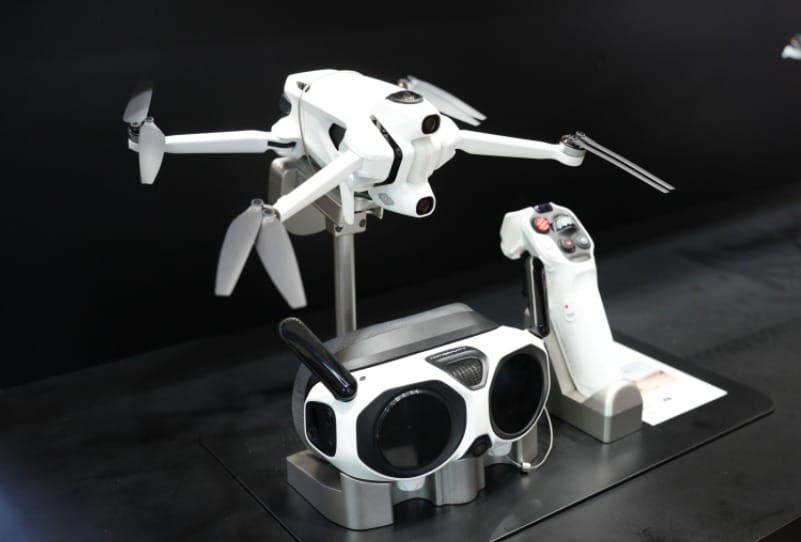
The competition for dominance in the consumer drone market has shifted toward 360-degree aerial videography, with Arashi Vision and DJI preparing rival products that promise to redefine creative workflows. Both companies are targeting the regulated sub-250 gram category with the Insta360 Antigravity A1 and the DJI Avata 360, devices designed to allow creators to capture full surround video and reframe shots in post-production, thereby separating flight control from camera framing.
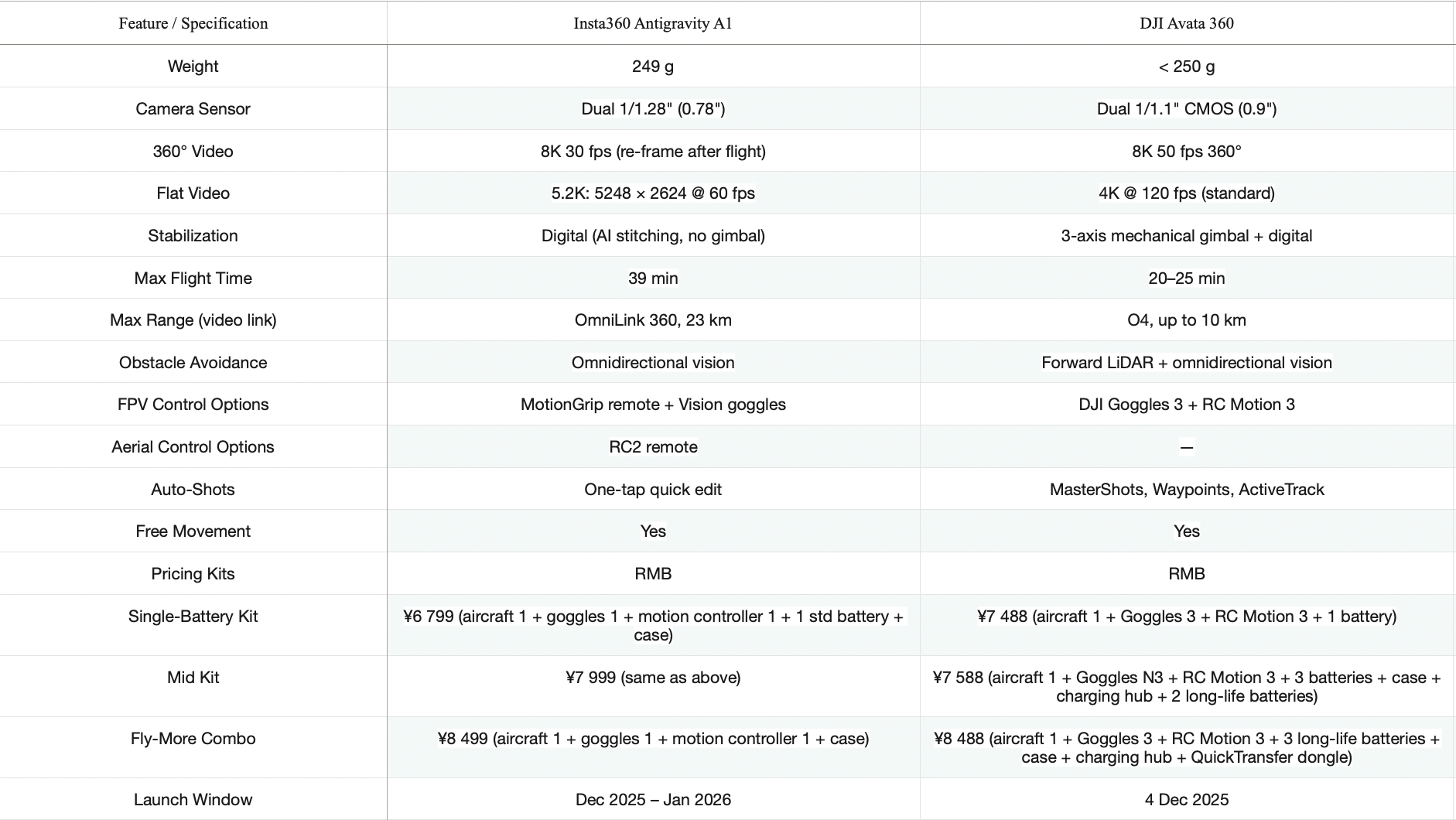
Market observers are closely monitoring the technical disparities, as the entrants offer distinct advantages in hardware versus software capabilities. While DJI appears to be leveraging superior sensor size and frame rates to appeal to traditional videographers, Arashi Vision is aggressively pushing flight endurance and transmission range boundaries to differentiate the Antigravity A1. The divergence in specifications highlights different engineering philosophies, with DJI maintaining mechanical stabilization components while its competitor relies heavily on AI-driven digital stitching.
Recent signals suggest adjustments to the anticipated launch schedules for these flagship devices, potentially synchronizing their market entry. While the Insta360 Antigravity A1 is targeting a release window between December of this year and January 2026, the DJI Avata 360, despite an initial target of early December, reportedly faces a delay until January 2026. This timing sets the stage for a direct commercial clash in the first quarter of next year, alongside updates to other product lines such as the DJI Pocket 4.
Pricing strategies reveal an aggressive stance from Arashi Vision, with entry-level kits undercutting its rival. The base kit for the Antigravity A1 is priced at RMB 6,799 yuan (US$936), positioning it as a competitive alternative to DJI's offering, which starts at RMB 7,488 yuan. This pricing spread, combined with disparities in battery inclusion in higher-tier bundles, reflects a broader battle for market share in the high-end enthusiast segment.
Optical Performance and Hardware Specifications
The core differentiator between the two units lies in their imaging systems and stabilization methods. The DJI Avata 360 is equipped with dual 1/1.1-inch CMOS sensors, larger than the dual 1/1.28-inch sensors found on the Insta360 Antigravity A1. This hardware advantage allows the DJI unit to capture 360-degree video at 8K resolution at 50 frames per second (fps), surpassing the Insta360’s 30 fps cap at the same resolution. Furthermore, for standard "flat" video, DJI offers 4K recording at 120 fps, whereas its competitor provides a 5.2K resolution at 60 fps.
Stabilization approaches also differ significantly. DJI employs a hybrid system combining a 3-axis mechanical gimbal with digital stabilization, adhering to traditional hardware stability. In contrast, the Insta360 Antigravity A1 omits the mechanical gimbal entirely, relying on digital stabilization and AI stitching. Both units feature omnidirectional vision systems for obstacle avoidance, though DJI supplements this with a forward-facing LiDAR module, potentially offering superior navigation in low-light environments.
Endurance and Transmission Capabilities
Arashi Vision claims a substantial advantage in flight efficiency and connectivity. The Antigravity A1 specifications list a maximum flight time of 39 minutes, nearly double the 20 to 25-minute range expected from the DJI Avata 360. In terms of signal transmission, the gap is similarly pronounced; the Insta360 unit utilizes an "OmniLink 360" system with a stated maximum range of 23 kilometers, compared to the 10-kilometer limit of DJI’s O4 transmission system.
Both drones support full freedom of movement and are compatible with motion control peripherals—the MotionGrip for Insta360 and the RC Motion 3 for DJI—as well as their respective proprietary goggles.
Pricing Structure and Market Positioning
The pricing tiers indicate Arashi Vision is leveraging value to capture market share. The base Insta360 Antigravity A1 kit, which includes the aircraft, goggles, motion controller, and one standard battery, is priced at RMB 6,799 yuan. A comparable single-battery setup for the DJI Avata 360, including the Goggles 3 and RC Motion 3, retails at RMB 7,488 yuan.
For power users, the pricing dynamics shift slightly. Insta360’s "Fly-More Combo," priced at RMB 8,499 yuan, provides the standard accessories plus a case. Conversely, DJI’s top-tier combo is listed at RMB 8,488 yuan and includes three long-life batteries, a charging hub, and a QuickTransfer dongle, suggesting DJI is attempting to offer higher value in its most expensive bundles to offset the higher entry price. A mid-tier kit for the Insta360 is available at RMB 7,999 yuan, while DJI lists a mid-range option at RMB 7,588 yuan.