
Nio’s new ES8 tops China safety ratings, shifting EV competition toward “pre-crash” software and sensors
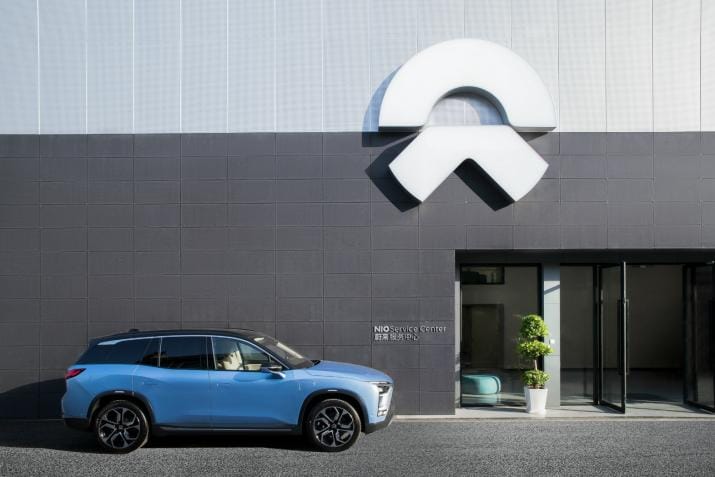
Nio’s new ES8 sport-utility vehicle is using a clean sweep in China’s latest crash and safety assessments to reposition safety as a software-and-sensor contest, pushing premium electric-vehicle makers to compete on milliseconds of pre-crash intervention rather than only post-impact protection.
China Insurance Automotive Safety Index (C-IASI) said the new ES8 delivered five “all-excellent” results in its most recent tests, placing it at the top of the battery-electric, full-size three-row SUV segment in the dataset disclosed. The outcome arrives as automakers in China face intensifying scrutiny over assisted-driving claims and real-world crash outcomes, prompting buyers and insurers to focus more on verifiable safety performance.
Early market takeaway: the ES8’s headline score is likely to matter less as a marketing trophy than as validation of a strategy—tight integration of cameras, radar, restraint systems and high-voltage protection—that can influence insurance pricing, supplier content value, and regulatory expectations for EV safety architectures.
Safety scores reinforce Nio’s push into insurer-facing metrics
C-IASI test results are watched closely by consumers and underwriters because they provide a standardized read on structural performance and occupant protection. By leading its BEV three-row SUV peer set in the latest release, Nio strengthens its positioning in the premium family-hauler niche—an area where brand differentiation increasingly comes from measurable safety and reliability rather than range figures alone.
For investors, the more durable implication is that safety performance can translate into lower long-term ownership costs and stronger residual values, which in turn can support leasing economics and reduce financing friction—key issues in China’s price-competitive 2026 EV market.
Pre-crash restraints reframe the seat belt as an actuator
Nio’s ES8 adds what it calls a PPMI active pre-tensioning seat belt that calculates pre-tightening force based on collision type, speed differential and occupant posture, then applies staged restraint. The system uses three force levels: about 100 Newtons for rear-impact risk (PPL), about 180 Newtons when automatic emergency braking (AEB) is triggered (PPM), and about 250 Newtons when a frontal collision is deemed unavoidable (PPH).
That design turns the seat belt into an active actuator coordinated with airbags and multi-sensor inputs under a “driver intelligent restraint system,” aiming to reduce injury in low- to mid-speed crashes by tailoring restraint timing and load to driver size and position. The commercial implication is higher sensor-fusion and restraint-system content per vehicle, benefiting suppliers tied to control algorithms, belt retractors, and airbag modules that can execute variable strategies.
Rear-impact mitigation aims to cut secondary crashes and liability
Rear-end collisions remain a frequent real-world scenario, and the ES8 introduces Rear Collision Mitigation (RCM) that escalates from warning to intervention. When rear radar or cameras detect a rapidly approaching vehicle with collision risk, the ES8 triggers high-frequency hazard-light flashing and instrument/HUD alerts. If impact becomes unavoidable, it pre-tensions belts and pre-charges braking pressure to shorten full-brake response after the hit, seeking to reduce the risk of a secondary collision with pedestrians or cross-traffic ahead.
If validated at scale, features that reduce post-impact roll-through and secondary incidents can reshape fleet and insurance assessments because they target not only occupant injury severity but also third-party damage exposure—an area that can materially affect claims costs.
High-voltage cutoffs and “black-box” uploads move EV safety beyond the cabin
The ES8 adds a “Pre-HV cutoff” function designed to reduce electrical shorting and arcing risks by lowering or shutting off high-voltage supply to the air-conditioning compressor and PTC heater when pre-collision signals such as AEB or pre-crash alerts indicate an unavoidable impact.
It also introduces a Pre-MSD feature that, according to Nio, can upload key pre-crash data within 500 milliseconds before impact—including vehicle type, speed, braking status, collision direction, occupant count, timestamps and environmental perception data—aimed at preserving evidence and triggering emergency response even if low-voltage power or connectivity fails during severe accidents.
For the industry, the direction is clear: as EVs become rolling sensor platforms, safety differentiation will increasingly come from system-level design—data capture, rescue triggers and high-voltage risk management—areas where automakers with vertically integrated software stacks may gain an edge.
Related Coverage:
Nio’s ES9 Teaser Puts Steer-by-Wire Chassis at the Center of Its 2026 Large-SUV Fight
NIO’s First Profit Is a Milestone—But the Strategy Behind It Matters More